
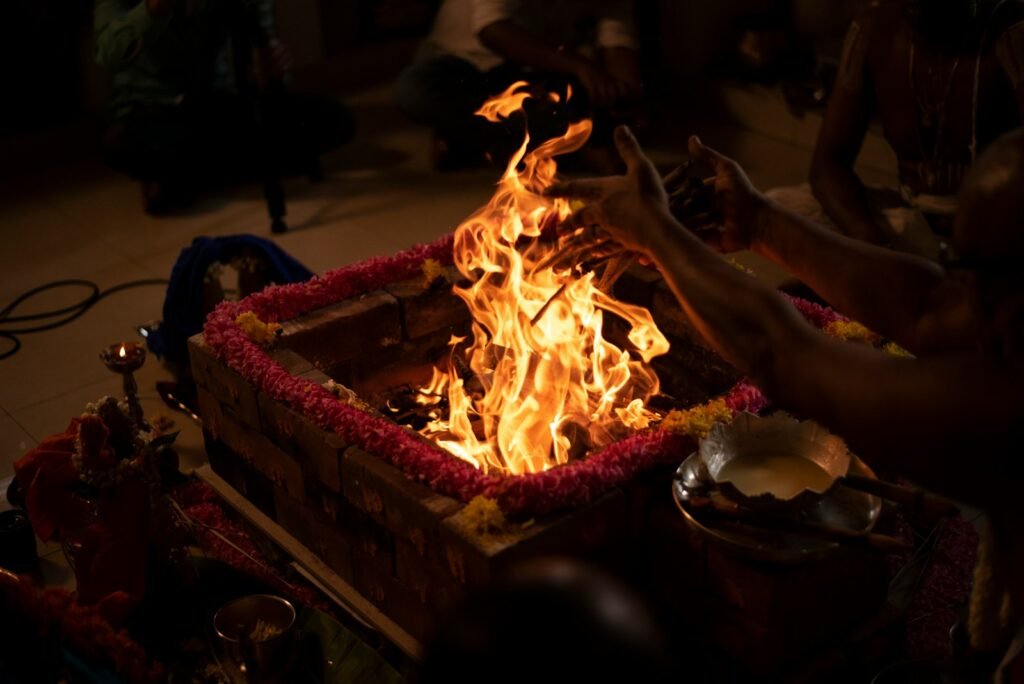
Shani (Saturn) Puja
The Shani Puja is a traditional Vedic ritual for Saturn, performed in your name with a sankalpa from your birth details, Shani mantra japa and the offerings associated with Saturn. In Vedic astrology Saturn is linked with discipline, delays, hard work, responsibility, older people and long-term results, so this puja is usually considered when Saturn is under pressure in your chart.
Read the video transcript
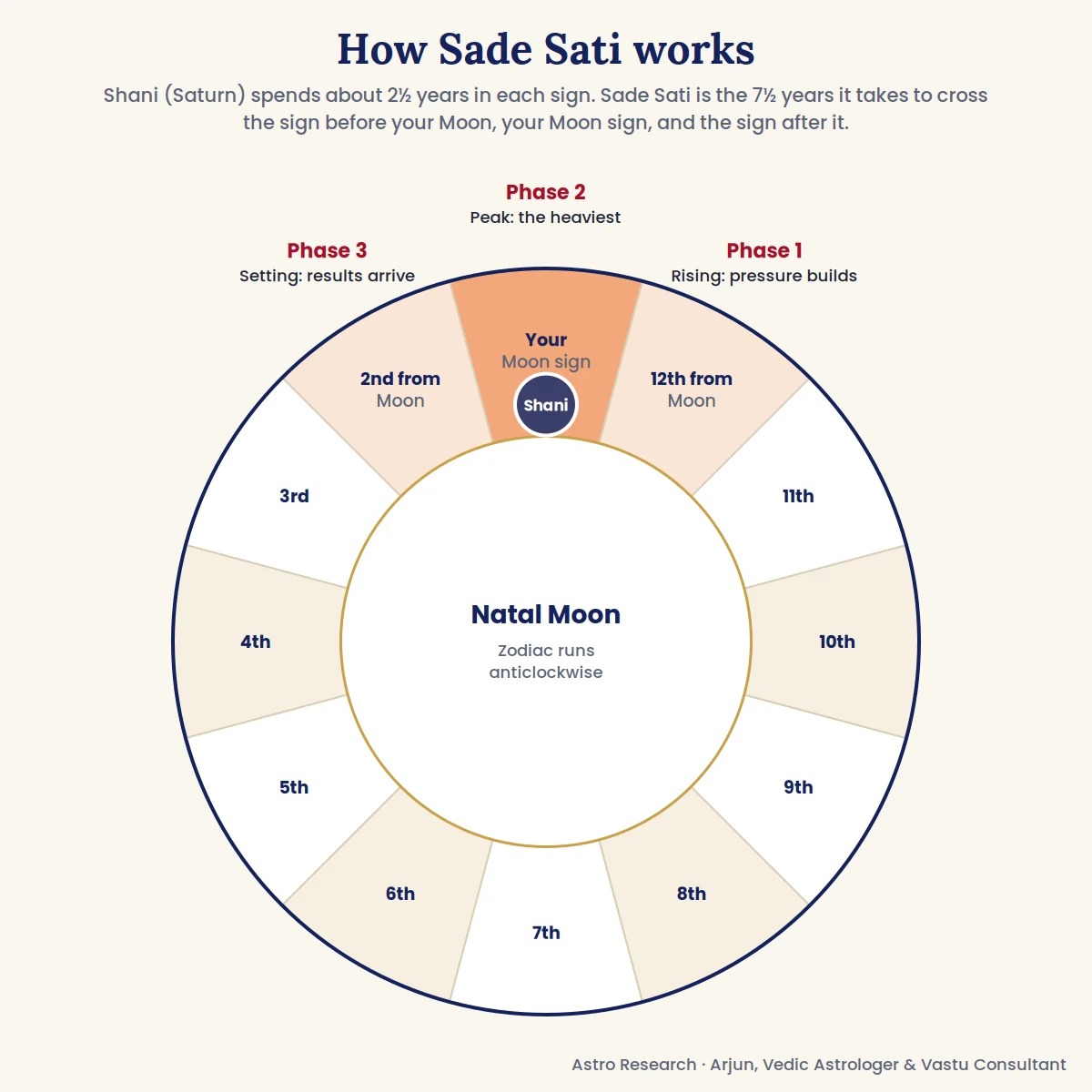
- Saturn moves slowly: Shani spends about 2½ years in each zodiac sign. Sade Sati is the 7½ years it takes to cross three signs around your Moon.
- Phase 1, rising: Saturn enters the sign before your Moon. Pressure builds, plans slow down and you feel the weight of responsibility.
- Phase 2, the peak: Saturn crosses your Moon sign. Often the heaviest stretch: tiredness, delays and tests of patience.
- Phase 3, setting: Saturn moves on. Lessons settle in and steady, earned results often start to arrive.
- What actually helps: a steady routine, honest effort, Saturday seva and Shani mantra, and a chart check of how strong your Saturn and Moon are.
See how to book the Shani Shanti Puja →
When is a Shani Puja considered?
A Shani Puja is usually considered when your birth chart, current Dasha or a transit shows Saturn under strain. Common indications include:
- You are in Sade Sati or Saturn’s Dhaiya (Kantak Shani)
- Saturn is debilitated in Aries or heavily afflicted
- You are running a Shani Mahadasha or Antardasha
Arjun checks your chart first, because the same placement can be strong or weak depending on the rest of the chart. If a puja isn’t needed, he’ll tell you.
Shani at a glance
Shani’s traditional day is Saturday, its presiding deity is Lord Shani and Lord Hanuman, and its beej mantra is “Om Praam Preem Praum Sah Shanaischaraya Namah”. These are the classical associations a Shani Puja draws on:
| Graha | Shani (Saturn) |
|---|---|
| Day | Saturday |
| Presiding deity | Lord Shani and Lord Hanuman |
| Beej mantra | Om Praam Preem Praum Sah Shanaischaraya Namah |
| Traditional japa count | 23,000 recitations |
| Colour | Black and dark blue |
| Traditional offerings (daan) | Black sesame, mustard oil, black urad dal and iron |
| Associated gemstone | Blue sapphire (Neelam), only after careful assessment; wear only on personal advice |
How is the Shani Puja performed?
The puja is performed on your behalf, usually on a Saturday, often at sunset, so you don’t need to be present.
- Sankalpa: your full name, date, time and place of birth are used to set the ritual intention.
- Invocation: Lord Ganesha is invoked first, followed by Lord Shani and Lord Hanuman.
- Mantra japa: the Shani beej mantra is recited by the priests.
- Havan and offerings: a fire ritual with the traditional samagri and daan for Saturn.
- Confirmation: you receive confirmation once the puja is complete.
Astrologer’s insight from Arjun
“A puja works alongside the way you live. I always pair a Shani Puja with one or two simple daily practices, so the remedy becomes part of your routine rather than a one-off event.”
Frequently asked questions
Do I need to attend the Shani Puja?
No. It is performed in your name using your sankalpa, a long-established Vedic practice. A live video link can be arranged on request.
Is a Shani Puja right for me?
It depends on your chart. Arjun checks where Saturn sits, your current Dasha and the major transits before recommending it. A consultation is the best place to start if you’re unsure.
What else can I do alongside the puja?
Simple daily remedies help. See the Shani remedies guide for mantra, daan and lifestyle practices.
Book your Shani Puja
Message Arjun on WhatsApp (0416 465 395) or call (02) 8526 6969 to arrange your puja. Not sure it’s the right remedy? Book a consultation and Arjun will check your chart first, or compare all options on the Book a Puja page.
Pujas and remedies are traditional spiritual practices offered in good faith. Their effects are personal and can’t be guaranteed, and they are not a substitute for medical, legal, financial or psychological advice. See our disclaimer.
When Shani (Saturn) is the pressure point
Shani is the teacher of patience and karma. During Sade Sati, Saturn return or a Shani period, people describe heavy delays, tiredness and the sense that effort isn't paying off. Saturn rewards discipline, so remedies are as much about steady habits as ritual.
What people tell me
- Delays despite real effort: "nothing moves however hard I try."
- Feeling worn down and exhausted for months.
- Sade Sati pressure, or the Saturn return around 27 to 30.
The traditional remedy
Shani Shanti Puja, with Saturday practice: Shani or Hanuman mantra, mustard oil, black sesame or seva for those in need, and a reliable daily routine.
The Vastu zone to look at
West and South-West: Saturn's West (Varuna) zone and the grounding South-West. Keep heavy furniture in the South-West and the West clear of clutter.
Shani Shanti Puja → Book a consultation with Arjun
Everyday remedies for Saturn · All nine planets together: Navagraha Shanti Puja
Questions people ask about Saturn
Which phase of Sade Sati is the worst?
For most people the second phase, when Saturn crosses the Moon sign, feels heaviest. Some feel the third phase strongly if Saturn is weak in their chart. How hard it is depends on Saturn's strength and your Dasha, not the phase alone.
What happens after Sade Sati ends?
Many people feel lighter and start seeing results from the effort they put in. Saturn tends to give back what was earned during the period, which is why discipline during Sade Sati matters.
What helps when Sade Sati and Shani Mahadasha happen together?
This overlap needs a careful chart reading. Practical steps help most: routine, patience, honest work, Saturday seva and Shani mantra. A Shani Shanti Puja at the start of the most intense stretch is a traditional support.