
Chandra (Moon) Puja
The Chandra Puja is a traditional Vedic ritual for the Moon, performed in your name with a sankalpa from your birth details, Chandra mantra japa and the offerings associated with the Moon. In Vedic astrology the Moon is linked with the mind, emotions, rest, your relationship with your mother and your sense of security, so this puja is usually considered when the Moon is under pressure in your chart.
See how to book the Chandra Shanti Puja →
When is a Chandra Puja considered?
A Chandra Puja is usually considered when your birth chart, current Dasha or a transit shows the Moon under strain. Common indications include:
- The Moon is waning, debilitated in Scorpio, or in the 6th, 8th or 12th house
- The Moon is joined by Rahu, Ketu or Saturn
- You are running a Chandra Mahadasha or a Saturn transit over the Moon
Arjun checks your chart first, because the same placement can be strong or weak depending on the rest of the chart. If a puja isn’t needed, he’ll tell you.
Chandra at a glance
Chandra’s traditional day is Monday, its presiding deity is Lord Shiva, and its beej mantra is “Om Shraam Shreem Shraum Sah Chandramase Namah”. These are the classical associations a Chandra Puja draws on:
| Graha | Chandra (Moon) |
|---|---|
| Day | Monday |
| Presiding deity | Lord Shiva |
| Beej mantra | Om Shraam Shreem Shraum Sah Chandramase Namah |
| Traditional japa count | 11,000 recitations |
| Colour | White and silver |
| Traditional offerings (daan) | Rice, milk, white cloth and silver |
| Associated gemstone | Pearl (Moti); wear only on personal advice |
How is the Chandra Puja performed?
The puja is performed on your behalf, usually on a Monday, often in the evening, so you don’t need to be present.
- Sankalpa: your full name, date, time and place of birth are used to set the ritual intention.
- Invocation: Lord Ganesha is invoked first, followed by Lord Shiva.
- Mantra japa: the Chandra beej mantra is recited by the priests.
- Havan and offerings: a fire ritual with the traditional samagri and daan for the Moon.
- Confirmation: you receive confirmation once the puja is complete.
Astrologer’s insight from Arjun
“A puja works alongside the way you live. I always pair a Chandra Puja with one or two simple daily practices, so the remedy becomes part of your routine rather than a one-off event.”
If you are struggling with your mood, anxiety or sleep, please also talk to your GP or a mental health professional. Lifeline is available on 13 11 14.
Frequently asked questions
Do I need to attend the Chandra Puja?
No. It is performed in your name using your sankalpa, a long-established Vedic practice. A live video link can be arranged on request.
Is a Chandra Puja right for me?
It depends on your chart. Arjun checks where the Moon sits, your current Dasha and the major transits before recommending it. A consultation is the best place to start if you’re unsure.
What else can I do alongside the puja?
Simple daily remedies help. See the Chandra remedies guide for mantra, daan and lifestyle practices.
Book your Chandra Puja
Message Arjun on WhatsApp (0416 465 395) or call (02) 8526 6969 to arrange your puja. Not sure it’s the right remedy? Book a consultation and Arjun will check your chart first, or compare all options on the Book a Puja page.
Pujas and remedies are traditional spiritual practices offered in good faith. Their effects are personal and can’t be guaranteed, and they are not a substitute for medical, legal, financial or psychological advice. See our disclaimer.
When Chandra (Moon) is the pressure point
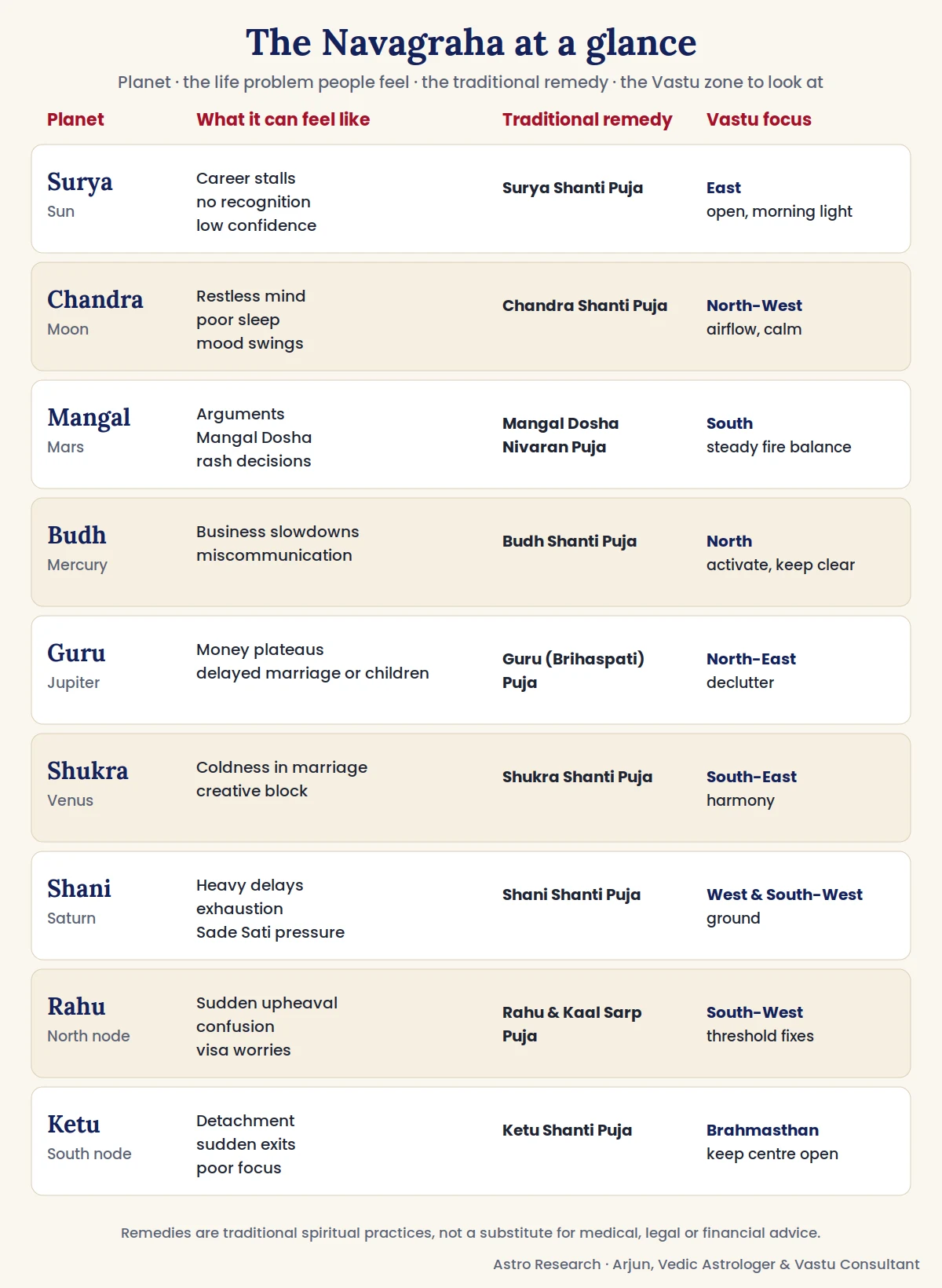
The Moon is the mind. When Chandra is under pressure, people tell me their thoughts won't switch off, sleep is broken and moods swing for no clear reason. Remedies aim to settle the mind and routine, alongside proper medical support where it is needed.
What people tell me
- Overthinking and a restless mind, especially at night.
- Broken sleep and feeling emotionally overwhelmed.
- Mood swings, often when the Moon sits with Rahu, Ketu or Saturn.
The traditional remedy
Chandra Shanti Puja, with Monday practice: Om Som Somaya Namah, a light fast or simpler food on Mondays, and rice, milk or white cloth as daan.
The Vastu zone to look at
North-West: this is the Vayu (air) zone, linked with the Moon. Keep it ventilated and free of clutter, and avoid heavy storage or a cluttered bedroom there.
Chandra Shanti Puja → Book a consultation with Arjun
Everyday remedies for the Moon · All nine planets together: Navagraha Shanti Puja
Questions people ask about the Moon
What are the signs of a weak Moon in a birth chart?
Commonly a waning or afflicted Moon, a Moon with Rahu, Ketu or Saturn, or a Moon in the 6th, 8th or 12th house. People describe it as sensitivity, overthinking and unsettled sleep. I always read it with the whole chart before calling it weak.
Can astrology help with anxiety?
Astrology can show stressful periods and what tends to steady you, and remedies can support a calmer routine. It does not treat anxiety. If worry or low mood is affecting daily life, please see your GP or a psychologist, and in a crisis call Lifeline on 13 11 14.
Do remedies work for a Moon and Rahu conjunction?
They help many people feel steadier. I usually suggest a Chandra mantra on Mondays, Durga worship for Rahu, regular sleep and less late-night screen time, and a Chandra or Rahu Shanti Puja when the conjunction is being activated by Dasha.