
Why Your Kitchen Direction Matters More Than Its Colour Scheme
By Rajat — Vedic Astrologer & Vastu Consultant, Astro Research, Sydney
Most renovation conversations focus on benchtops and cabinetry, but in Vastu Shastra the single most important decision about a kitchen is its direction — the South-East corner, governed by Agni the fire element, is considered the ideal placement, and getting this wrong can affect the health and harmony of everyone who eats from that kitchen, regardless of how beautifully it’s finished.
Why South-East Is the Ideal Kitchen Direction
The South-East (Agni) corner of the home is ruled by the fire element, making it the natural home for the kitchen and its cooking flame, while the South-East placement also catches strong morning light, which Vastu considers important for food preparation.
When the South-East isn’t available, the North-West is the accepted second choice, associated with air and movement rather than fire, which still supports a functional, harmonious kitchen without the ideal elemental match. What Vastu consistently advises against is placing the kitchen in the North-East (Ishaan corner, reserved for spiritual and mental clarity) or the South-West (the heaviest, most stable zone of the home, better suited to the master bedroom) — both directions are considered to work against the kitchen’s fire energy rather than with it.
Placement Within the Kitchen Matters Almost as Much
Once the kitchen’s overall direction is set, where you position the stove, sink and cook’s own body while cooking all carry their own Vastu significance.
The Stove Should Sit in the South-East, and You Should Face East While Cooking
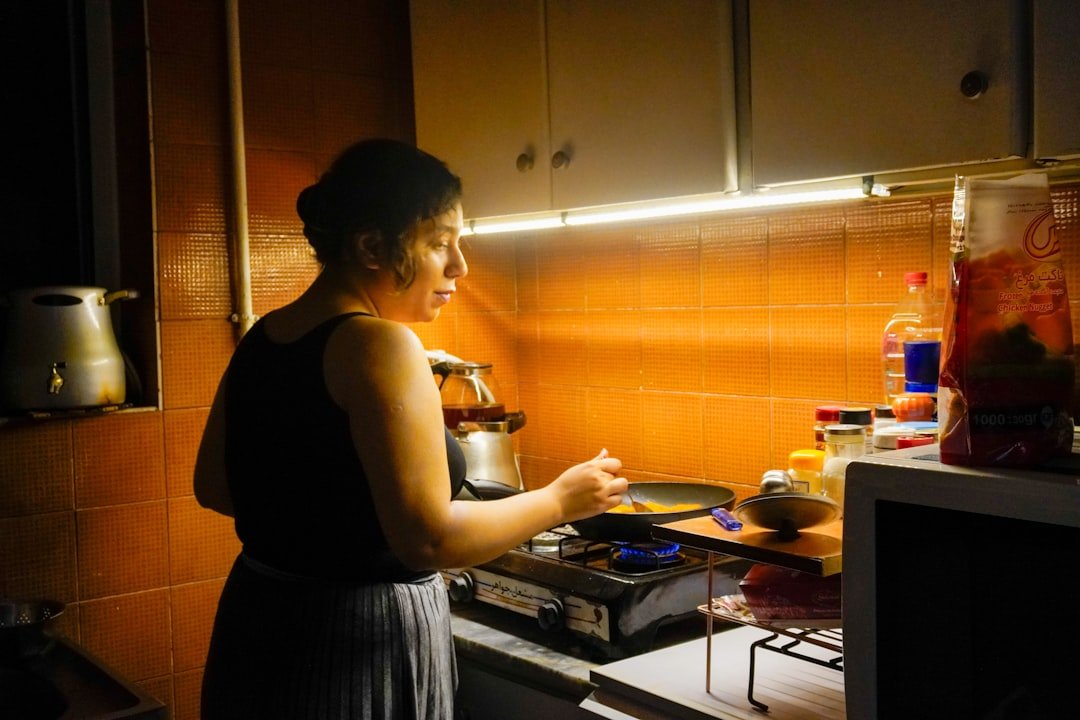
Within the kitchen itself, the stove ideally sits in the South-East corner of the room, with the cook facing East while preparing food — the direction associated with new beginnings and positive energy. Facing South while cooking is generally discouraged in Vastu, as it’s associated with reduced vitality in the food being prepared. If your existing layout makes an East-facing stove impossible, even angling the cook’s usual standing position toward East during meal prep is considered a meaningful partial correction.
Keep the Sink Separate From the Stove — Water and Fire Shouldn’t Meet
Water (the sink) and fire (the stove) are considered opposing elements in Vastu, so they should never sit directly adjacent to or opposite one another — the ideal sink placement is the North-East corner of the kitchen, keeping meaningful distance from the stove. This is one of the most common issues I find in modern open-plan kitchens, where island benches often place the sink and cooktop side by side purely for workflow convenience, without accounting for this elemental separation.

Working With What You Have: Corrections for Fixed Layouts
Most of the Sydney apartments and townhouses I consult on have a kitchen location fixed by strata approval or building structure, meaning a full relocation simply isn’t realistic. In these cases, Vastu offers meaningful partial corrections rather than an all-or-nothing verdict: repositioning the stove within the existing footprint, adjusting the cook’s facing direction, adding a small mirror behind the stove in specific cases to symbolically double the abundance of food, and using warm lighting to strengthen the fire element when the direction itself can’t be changed.
I always assess the whole kitchen as a system rather than fixating on the direction alone — a South-West kitchen with a well-corrected stove position and cooking direction often functions better than a technically-correct South-East kitchen with poor internal layout.
Astrologer’s Insight: When a full kitchen relocation isn’t possible, I focus my clients’ energy on the stove’s exact position and cooking direction first — these two corrections alone recover most of the benefit, even when the room’s overall direction can’t be changed. The same targeted, work-with-what-you-have approach applies to apartment layouts more broadly.
Kitchen Direction at a Glance
How each compass direction supports or works against the kitchen’s fire element.
| Direction | Vastu Verdict | Why |
|---|---|---|
| South-East | Ideal | Ruled by Agni (fire), natural match |
| North-West | Good alternative | Air element, supports movement |
| East | Acceptable | Good light, positive morning energy |
| North-East | Avoid | Ishaan corner reserved for clarity/spirituality |
| South-West | Avoid | Heaviest zone, conflicts with fire energy |

Featured Case Study
The Bondi Family Whose North-East Kitchen Was Quietly Draining Their Health
A family in Bondi came to me after years of recurring minor illnesses and persistent low energy that no amount of diet or lifestyle change seemed to shift. Their apartment renovation, done before they moved in, had placed the kitchen squarely in the North-East corner — the Ishaan zone meant for clarity and calm, not fire.
A full relocation wasn’t possible under their strata rules, so we focused on what could change: repositioning the stove to the room’s own South-East pocket, correcting the cook’s facing direction to East, and separating the sink from the cooktop with a small buffer shelf.
Within a few months, the family reported noticeably better energy and fewer of the minor illnesses that had been cycling through the household. None of this required demolition — just a precise, correctly-directed adjustment within the existing footprint.

Most kitchens can be meaningfully corrected without a full renovation, once you know exactly where the imbalance is coming from.
Read More Client Success Stories
Frequently Asked Questions About Kitchen Vastu
➕ What if my kitchen is already built in the wrong direction?
A full relocation is the ideal fix, but it’s rarely realistic, especially in apartments. Correcting the stove’s exact position, the cook’s facing direction, and the separation between sink and stove within the existing space recovers most of the benefit without any structural work.
➕ Does an open-plan kitchen change any of these rules?
The core principles still apply, but open-plan layouts need extra care around the fire-water separation, since island benches often place the sink and stove close together for workflow. I usually recommend a small buffer — even a narrow strip of bench space — between the two elements wherever possible.
➕ Is gas or induction cooking better for Vastu?
Vastu principles were codified long before induction cooktops existed, but in practice I treat the cooking surface — gas flame or induction element — as the modern equivalent of Agni, so the same directional and placement principles apply regardless of the heat source you use.
➕ How long before I notice a difference after correcting my kitchen?
Most clients report a shift within a few months, though this varies by household and by how significant the original imbalance was. Vastu corrections tend to work cumulatively rather than instantly, gradually easing the friction a poorly-oriented space creates.
About the Author
Rajat is a Vedic Astrologer and Vastu Consultant at Astro Research, based in Sydney, where he has spent over fifteen years combining classical Jyotish training with practical, modern consultations for clients across Australia. He specialises in career timing, relationship compatibility and Vastu corrections for the home and workplace.
Related Reading
- Apartment Vastu: What You Can Still Control When You Didn’t Choose the Layout
- Bathroom Vastu: Direction, Layout and Fixture Placement That Actually Works
- South-West Corner Vastu: Why This Zone Anchors Your Entire Home
Recommended Remedies
If health and vitality are the underlying concern behind your kitchen’s Vastu, this is the remedy I most often recommend alongside a full consultation:
Get Your Kitchen’s Vastu Assessed Properly
Book a full Vastu consultation and find out exactly what corrections your home needs.